Putney MP Backs Consultation on Social Media Rule Changes
'Short and sharp' review considering tougher restrictions for children
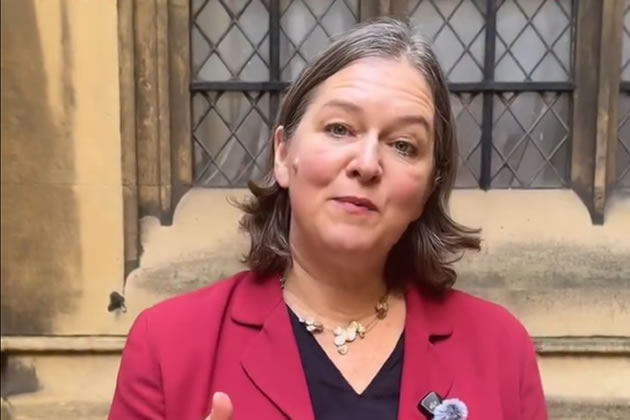
Fleur Anderson explaining her support for the consultation
February 5, 2026
Putney MP Fleur Anderson has welcomed the Government’s new “short and sharp” consultation on strengthening online protections for children, saying it marks an important step in addressing growing concerns about the impact of smartphones and social media on young people’s wellbeing.
The consultation will look at proposals to restrict addictive design features, introduce stronger age-verification checks and consider tougher limits on social media access for under-16s. Ministers have also said they will examine international approaches, including recent moves in Australia to restrict access to multiple platforms for younger teenagers.
The announcement comes amid increasing anxiety from parents, teachers and health professionals about the effects of constant online engagement on children’s mental health. National studies have linked heavy social media use to disrupted sleep, increased anxiety, exposure to harmful content and pressure to conform to unrealistic online standards.
Locally, Ms Anderson says she has heard the same concerns repeatedly from families across Putney. More than 1,000 parents have contacted her office in the past year to pledge limits on their children’s smartphone and social media use. Schools in the constituency, including Ark Putney Academy, have also adopted stricter mobile phone policies, which they say have improved behaviour and reduced distraction.
Supporters of reform argue that while school-day restrictions help, the most harmful effects often occur outside school hours, where children may be exposed to violent material, pornography or unmoderated peer pressure.
The MP said the scale of harmful content available to children should “shock us into action”. She highlighted research showing that a quarter of children have seen pornography by the age of 11, and argued that the current digital age of consent — set at 13 — may no longer be appropriate.
“The design of social media has been a social experiment on our young people for too long,” she said. “As a mother and grandmother, I share the fears of parents up and down the country. Many feel overwhelmed and outpaced by technology that is developing faster than regulation can keep up.”
She added that clearer national guidance for schools and stronger enforcement by Ofsted would help ensure consistency across the country.
The consultation forms part of a broader national conversation about how to balance children’s access to technology with the need to protect them from harm. Campaigners have long argued that platforms should be required to redesign their services to reduce addictive features such as infinite scrolling, autoplay and algorithmic content feeds.
Others warn that restrictions must be carefully designed to avoid unintended consequences, such as pushing young people onto unregulated platforms or creating barriers for those who rely on digital tools for social connection or support.
The Government’s consultation will gather views from parents, young people, schools, tech companies and child-safety experts. Anderson is encouraging local residents to take part. “This consultation is a crucial step forward,” she said. “It is time to put children’s wellbeing ahead of engagement metrics and profit, and I want to hear from constituents who have views or experiences to share.”
The consultation is expected to inform further legislation or regulatory changes later in the year.
Like Reading Articles Like This? Help Us Produce More This site remains committed to providing local community news and public interest journalism. Articles such as the one above are integral to what we do. We aim to feature as much as possible on local societies, charities based in the area, fundraising efforts by residents, community-based initiatives and even helping people find missing pets. We've always done that and won't be changing, in fact we'd like to do more. However, the readership that these stories generates is often below that needed to cover the cost of producing them. Our financial resources are limited and the local media environment is intensely competitive so there is a constraint on what we can do. We are therefore asking our readers to consider offering financial support to these efforts. Any money given will help support community and public interest news and the expansion of our coverage in this area. A suggested monthly payment is £8 but we would be grateful for any amount for instance if you think this site offers the equivalent value of a subscription to a daily printed newspaper you may wish to consider £20 per month. If neither of these amounts is suitable for you then contact info@neighbournet.com and we can set up an alternative. All payments are made through a secure web site. One-off donations are also appreciated. Choose The Amount You Wish To Contribute. If you do support us in this way we'd be interested to hear what kind of articles you would like to see more of on the site – send your suggestions to the editor. For businesses we offer the chance to be a corporate sponsor of community content on the site. For £30 plus VAT per month you will be the designated sponsor of at least one article a month with your logo appearing if supplied. If there is a specific community group or initiative you'd like to support we can make sure your sponsorship is featured on related content for a one off payment of £50 plus VAT. All payments are made through a secure web site. |